
Plaster is a building element with mineral substance. Drywall finished in paint is a coating over a paper-faced board. Specifiers choose between a wall the room is made of and a film brushed across a substrate. The right call depends on substrate, light, breathability, and the timescale you are designing for.
Setup
The choice rarely shows up as “plaster or drywall” on a drawing. It shows up as a wall section, a finish schedule, a target sheen, a paint code. By the time it reaches the painter, the call has already been made several spec lines back. We are writing this for the moment before that, when an architect or interior designer is still deciding what the wall is going to be.
Both materials have their place. Painted drywall is the right answer in most of the built world. It is fast, light, predictable, and easy to repair. Plaster is the right answer when the room is asking the wall to carry weight that paint cannot. Light behavior. Mineral color. Breathability. A surface that ages rather than chips. The question is not which is better in the abstract. The question is which the room needs.
The honest answer
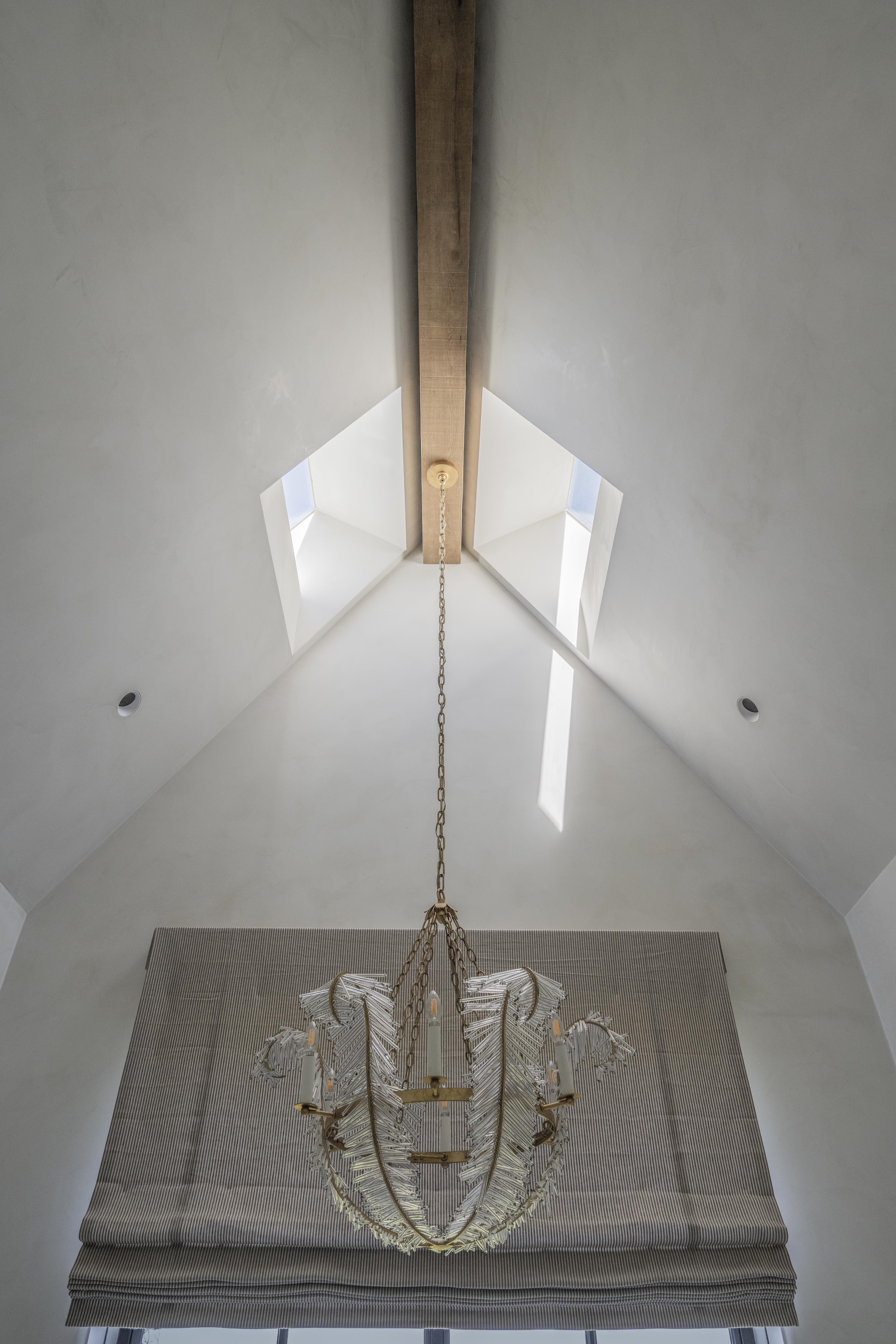
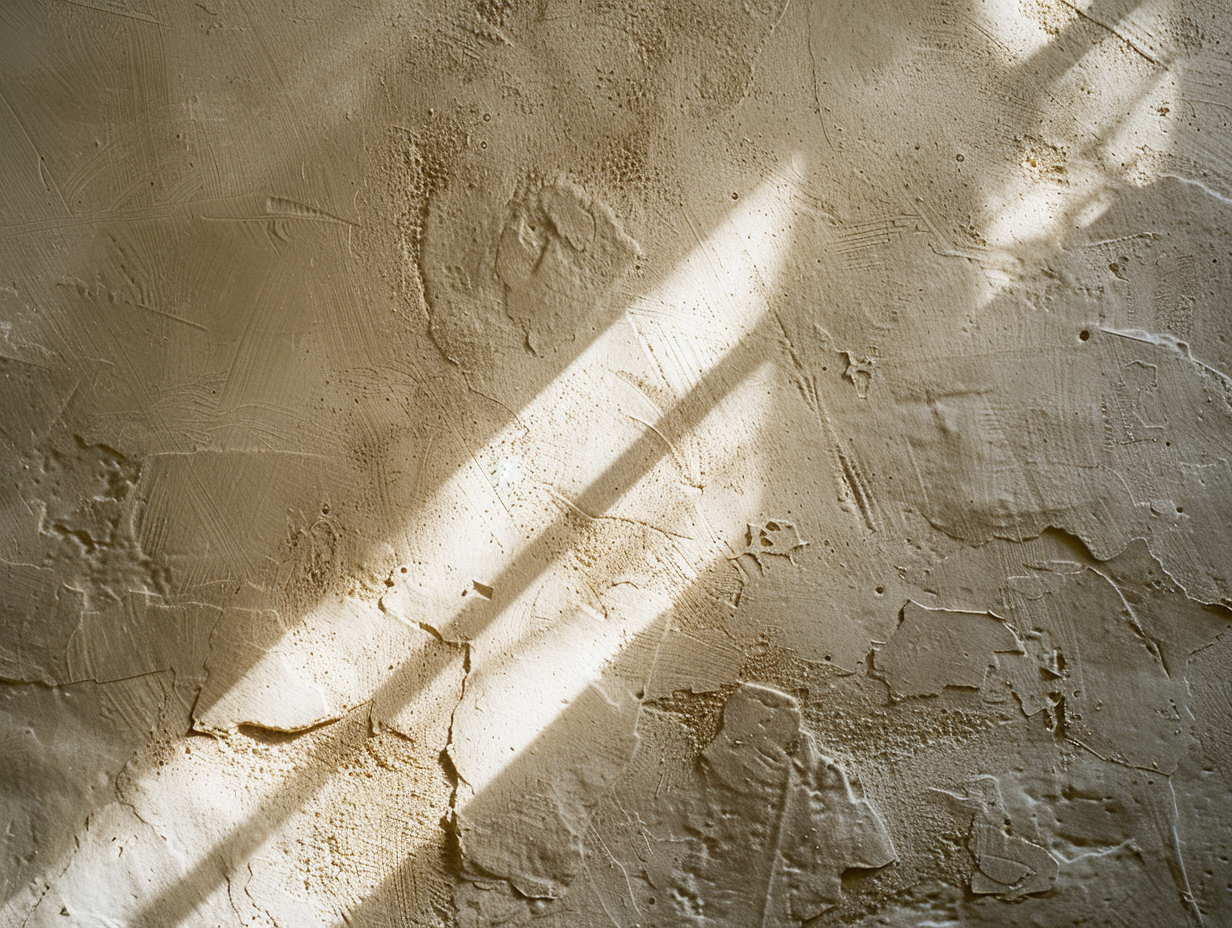
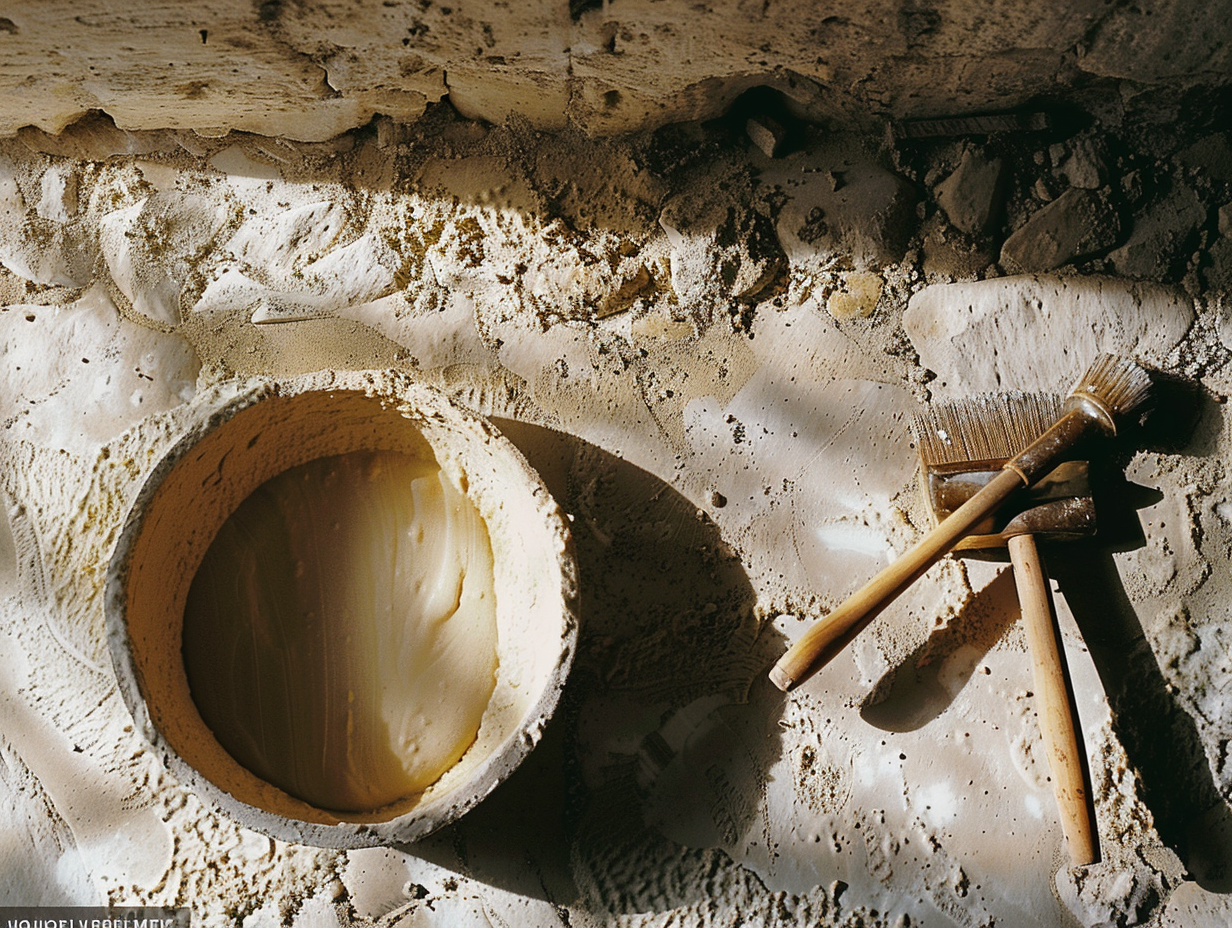
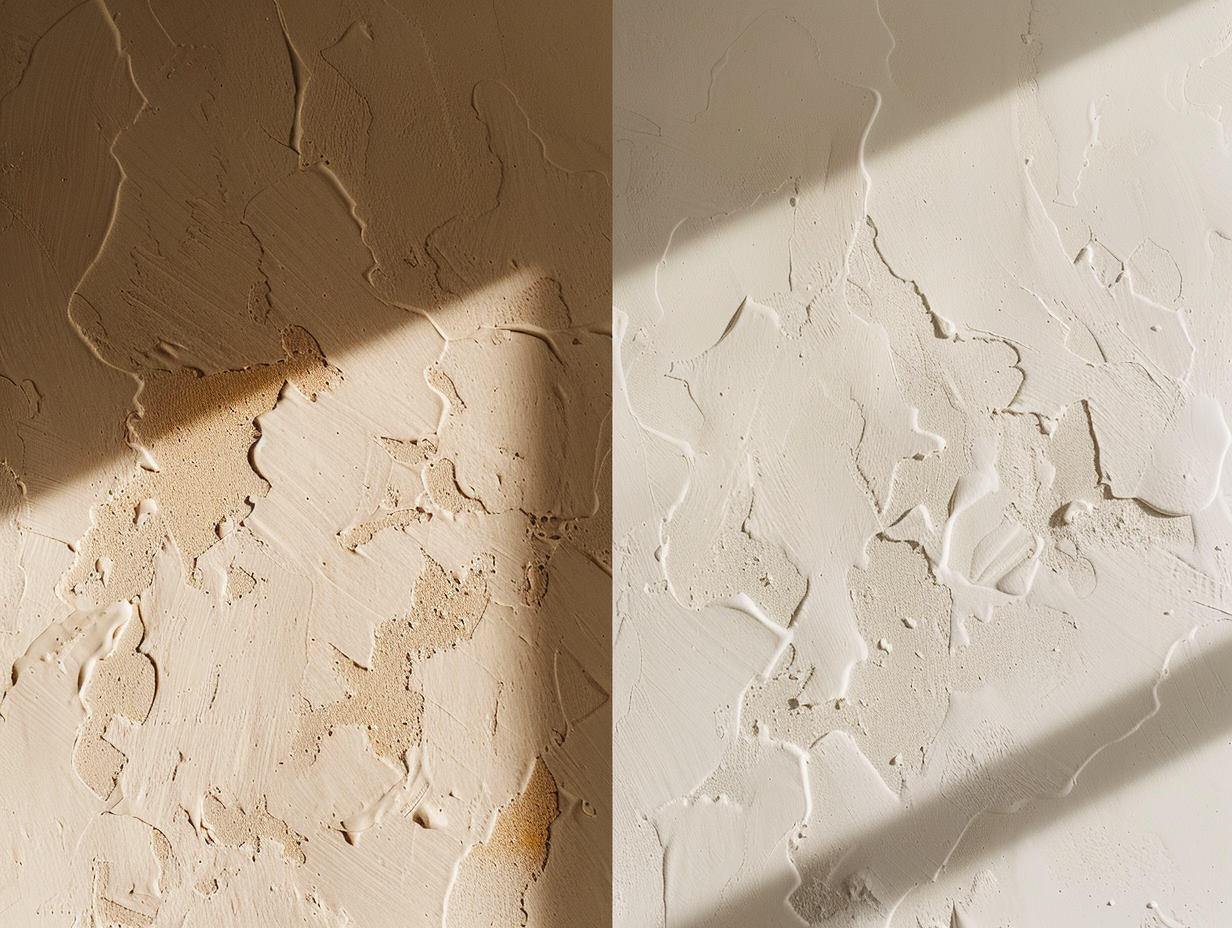
A plastered wall is mineral substance. Lime, gypsum, marble dust, sand, pigment, water. Mixed wet, troweled onto a substrate, cured into a continuous surface that is dense, slightly porous, and dimensional. The wall holds light because the surface has depth in it. A raking shaft of afternoon light reads the trowel, the slight optical variation in the body, the way the corners turn. Paint cannot do that, because paint is a film, and a film is flat.
A drywall wall is a paper-faced gypsum board screwed to studs, taped at the seams with a paper or mesh joint and a setting compound, primed, and then coated in two passes of paint. The visible surface is paint. The paint sits on paper. The paper sits on a board. Nothing about that stack is wrong, but nothing about it is mineral either. Move a hand across it and the friction is paper and acrylic. Move a hand across plaster and the friction is stone.
Breathability is the building-science difference that most often surprises specifiers. Lime-based plasters are vapor-open. They let moisture pass through the wall assembly and re-release it without trapping it behind a film. That matters in older masonry buildings, in humid climates, and in any wall section where you are trying to avoid the slow rot that happens when paint or vinyl seals a damp substrate. Painted drywall, especially with a latex or vinyl finish, is comparatively closed. In the right wall section that is fine. In the wrong one, it is the start of a problem nobody sees for five years.
Aging is the other difference. Paint chalks, scuffs, marks, and gets repainted on a cycle. Most commercial drywall walls are on a five- to seven-year repaint clock. Most residential ones are on a longer one only because nobody gets around to it. Plaster does not behave that way. A well-applied lime or gypsum plaster wall does not chip the way paint does, because there is no film to chip. Marks burnish in rather than scrape off. Twenty years on, a plaster wall in a residence usually looks better than it did at year one, because the surface has slowly settled into the room. The wall ages with the building instead of being refreshed on top of it.
Cost framing is where the conversation usually stalls, and where it usually deserves a longer time horizon. A plaster wall costs more on the day it goes in than a painted drywall wall does. That is the honest number. The longer number is different. Over a twenty-year horizon for a residence, the plaster wall typically absorbs zero repaints, no patch-and-paint cycles, no scuff coats. The painted drywall wall typically absorbs three to four. By the time you reach year fifteen, the running total often crosses. By year twenty, in most rooms that get used hard, the plaster wall is cheaper. The first invoice is bigger; the life of the wall is the comparison that matters.
Where each is correct: paint over drywall is correct when the room is utility-grade, when the substrate is new construction with no breathability concern, when the budget cannot stretch, when the room will be repainted on a turnover cycle anyway, or when the architectural language is genuinely flat and modern in a way that wants a film surface. Plaster is correct when the room is the centerpiece of the house or the project, when the light needs something to read, when the substrate is masonry or restoration, when the building is meant to be on a fifty-year arc rather than a five-year one, or when the architectural language is mineral in any way.
Practical takeaway
-
Write the wall, not the paint. If the room is the centerpiece, specify the substrate (plaster on lath, plaster on bonding-primed gypsum board, plaster on masonry) before you reach for a finish code. The wall is the decision.
-
Match the wall to the building’s vapor strategy. In old masonry, in humid coastal work, or anywhere the wall assembly needs to breathe, a lime plaster is the safer call. In a tight, sealed, vapor-controlled assembly, painted drywall is fine, but verify the assembly is actually doing what you think it is.
-
Compare costs on a twenty-year arc, not a single invoice. Run plaster against painted drywall plus the repaint cycle, the touch-up cycle, the patch-and-paint cycle, and the labor coordination cost of each repaint. The comparison gets honest fast.
-
Sample the plaster in the room, not in a studio. Plaster reads under the room’s light, not under any other. A board signed off in a designer’s office can land wrong in the actual room. Approve the sample where the wall will live.
-
Do not specify “plaster look” paint or a textured paint finish if the goal is a real plaster wall. Those are coatings. They will read as coatings under raking light, and the trades reading the spec will know the difference. If the budget cannot carry real plaster, write the painted wall honestly and let the room be what it is.
Closing
The wall a specifier writes into a drawing is the wall the room lives with. Painted drywall is the right answer most of the time, and there is nothing wrong with that answer. Plaster is the right answer when the room is asking the wall to do something paint cannot. The studio is happy to talk through which one the room is asking for, before the spec sheet locks the choice in.
Start with a conversation. /contact