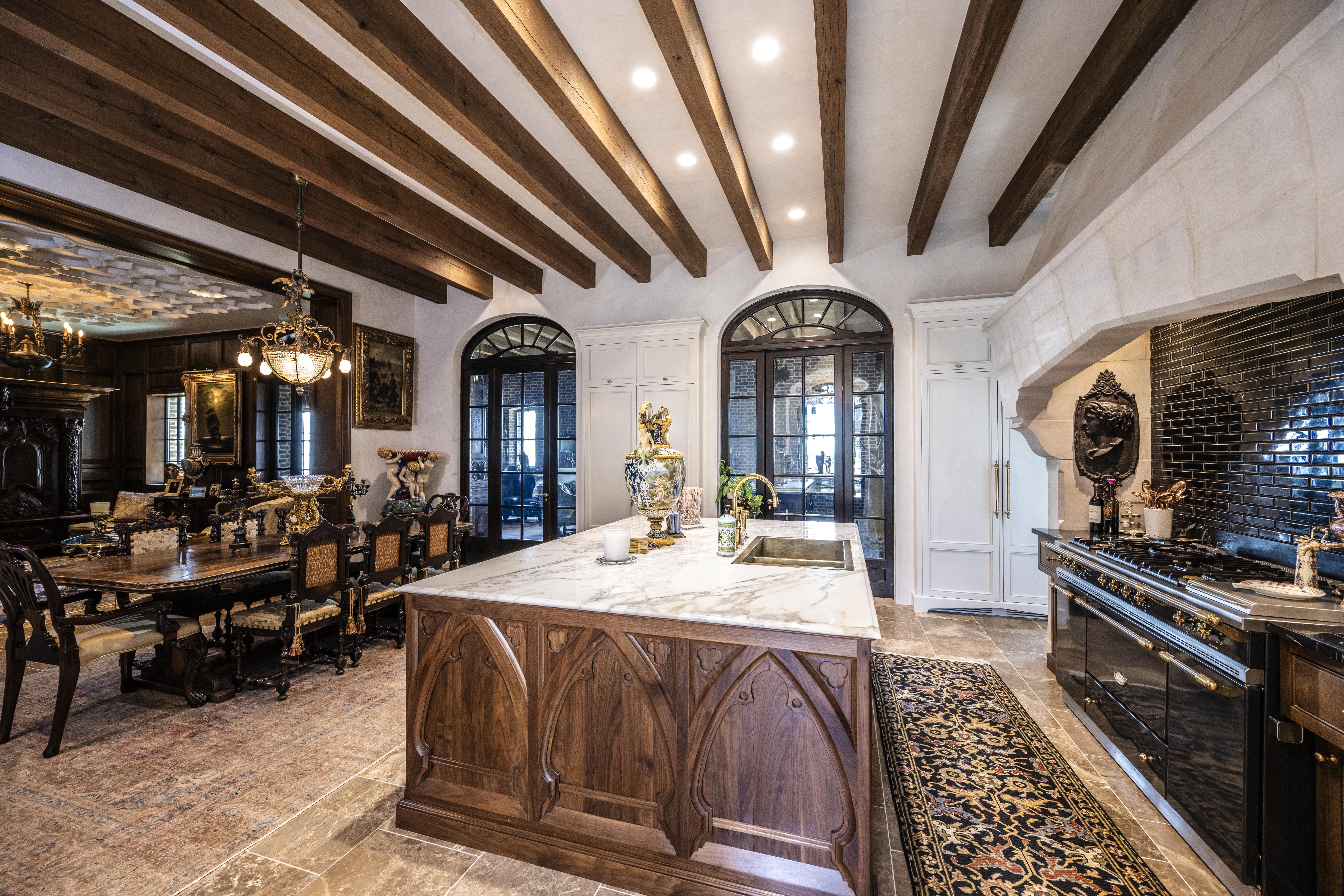

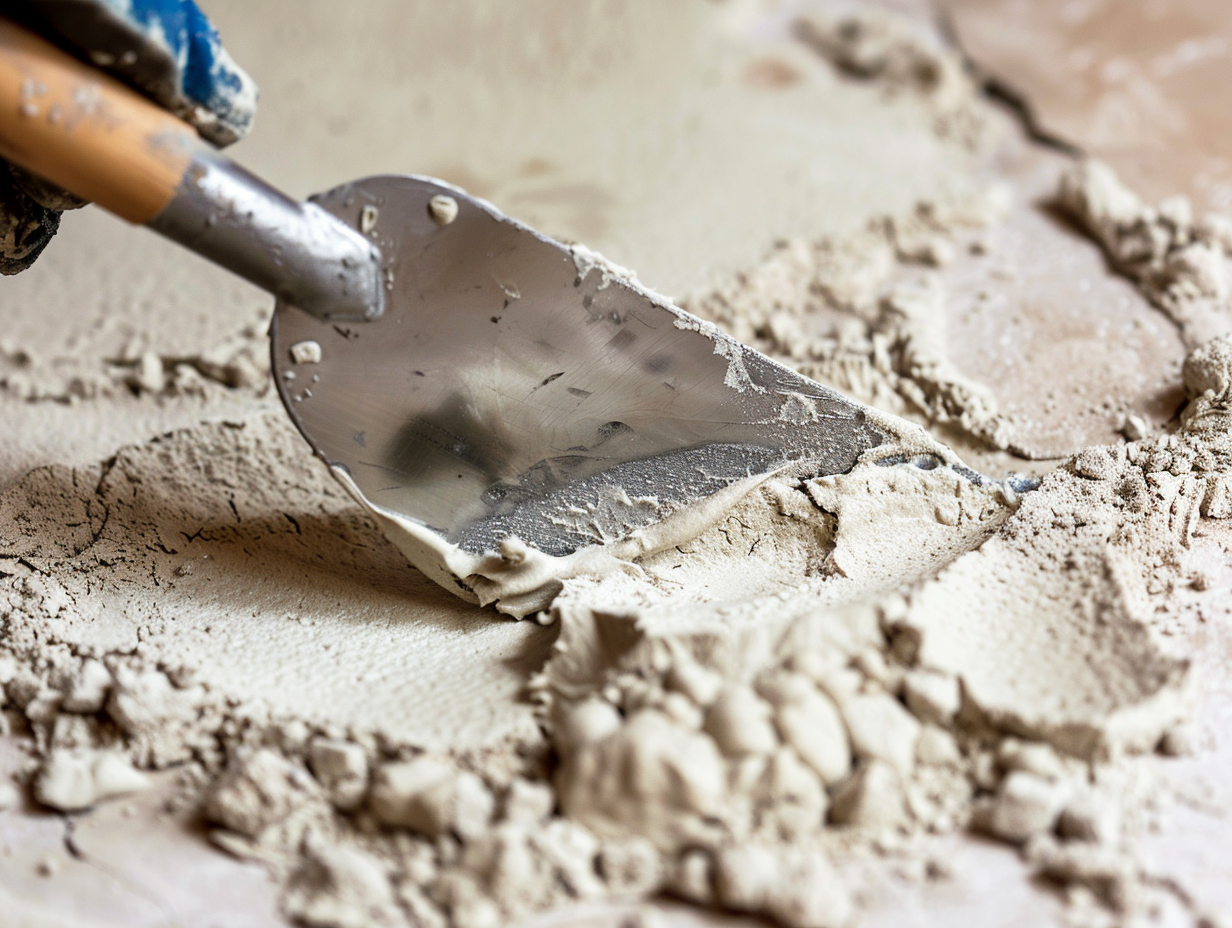
Marmorino and Venetian are lime and marble dust cousins. The line is not polish vs matte. It is aggregate grain, finish discipline, and the amount of polishing applied at the trowel. Most of PBO’s Venetian work is a suede finish, irregular shine and matte, not a mirror. Specify on grain and polish target, not on the popular shorthand.
Why the question keeps coming up
Specifiers write “Venetian” on a drawing when they often mean marmorino, and they write “marmorino” when they sometimes mean the suede finish version of Venetian. The confusion is fair. Both materials sit in the same Italian lime-and-marble tradition, both arrive on the truck looking similar, and both can be tuned across a range of sheens. The shorthand most trade articles offer (“Venetian is polished, marmorino is matte”) collapses under the work that actually gets built. Walk through a portfolio and the line is messier than that.
The honest version is worth knowing because the wrong word on a drawing produces the wrong wall. A polished Venetian at hospitality scale flattens the architecture. A tight-grain marmorino in a powder room can read flat where the room needed lift. Both finishes are correct in their place. Picking the place is the specifier’s job.
The honest answer
Marmorino and Venetian are first cousins, not opposites. Both are aged lime putty bound with marble dust. Both come out of the same Veneto craft tradition. Both can be pigmented in the body and finished by hand. The differences are real, but they sit at three specific places: the grain of the aggregate, the discipline of the finish, and the amount of polishing the crew commits to at the top coat.
Aggregate grain is the first divide. The marble dust in a marmorino mix is sifted finer than the fraction we keep for Venetian. Finer aggregate packs denser, dries to a tighter grain, and refuses to take a high polish even if the trowel tries. The Venetian mix carries a slightly coarser fraction that catches a polished trowel and gives back the layered translucency that finish is known for. The mixes are not interchangeable. A marmorino batch cannot be talked into being a polished Venetian, and a Venetian batch will not behave like marmorino under the trowel.
Finish discipline is the second divide. Marmorino is a trowel-only finish. The crew works the body and top coats to plane, pulls the surface tight, and stops. There is no burnish step. A burnish is what would push the wall into Venetian territory, and the marmorino discipline is to never let it get there. Venetian, by contrast, is a finish defined by the burnish. The trowel comes back across the top coat in repeated compression passes, and the surface tightens, deepens, and starts to throw light.
The amount of polishing is the third divide, and it is the one most articles leave out. Jared’s own framing on the PBO portfolio is direct: the majority of the studio’s Venetian work is what he calls a suede finish. Irregular shine and matte combo. No consistent reflective surface. The polish is real, but it is restrained, and it is uneven on purpose. A few projects in the library are taken further toward the high-gloss reading. At least one is the opposite, worked with small trowels for maximum movement and surface energy. The principal craft variable across the Venetian portfolio is not color or composition. It is how far the burnish goes.
That detail rewrites the textbook framing. The line between marmorino and Venetian is not “matte vs glossy.” A suede-finish Venetian and a tight-grain marmorino can both register as low-sheen surfaces from across a room. What separates them is the underlying behavior. The Venetian, even at suede, has the polish potential in it. The trowel has gone back across the surface. The depth is there in the layering. The marmorino does not have that depth and was never meant to. It is a denser, quieter mineral plane, and its sheen is structural rather than worked.
A useful test for the specifier: imagine the wall photographed from three meters under raking light. If the brief wants the wall to read as a single tight mineral surface holding scale at distance, that is marmorino. If the brief wants the wall to register as alive, with light catching some parts of the plane and not others, that is the suede-finish Venetian. If the brief wants the wall to reflect like worked stone, that is the high-polish Venetian, and it earns its place in a narrower set of rooms than the market specifies it for.
Practical takeaway
Five rules to carry into a drawing.
-
Do not specify by sheen shorthand. “Polished Italian plaster” almost always lands on Venetian, but the polish target needs to be named explicitly. “Matte Italian plaster” can be either material. Use grain and finish discipline as the spec language, not the popular labels.
-
Name the polish target on the sample board. For a Venetian spec, write whether the wall is the suede finish (irregular shine, restrained burnish), the high-polish variant (full burnish, wet-stone reading), or the small-trowel maximum-movement variant. The number on the wall comes from the sample board, not from the crew’s judgment in the moment.
-
Default to marmorino at architectural scale. Hospitality lobbies, large dining rooms, lofts, any wall the viewer reads at three meters or more under broad ambient light. The tighter grain holds the architectural cadence. A high-polish Venetian at that scale flattens the breaks and reveals.
-
Default to the suede-finish Venetian for residential interiors. Entry halls, living rooms, libraries, primary bedrooms. The irregular sheen lets the wall read as quiet under most lighting conditions and stay handsome under all of them. Reserve the high-polish variant for the rooms that genuinely want a worked-stone reading: certain powder rooms, intimate bar areas, classical interiors where the wall is meant to carry that language.
-
Do not mix them on a continuous plane. Marmorino next to polished Venetian on the same wall reads as two different materials, because they are. If a project needs both finishes, give each its own architectural break (a reveal, a return, a change of plane) so the eye accepts them as separate moves.
Closing
The line between marmorino and Venetian is real, but it lives in the material and at the trowel, not in the marketing label. Marmorino is the tighter-grain, trowel-only mineral plane that holds a room at architectural scale. Venetian is the layered, burnish-defined finish whose principal variable is how far the polish goes, and whose default at PBO is the suede finish rather than the mirror. Specify on grain and polish target. Approve on a sample board in the room’s actual light. The wall will land where you wrote it.
Start with a conversation. Contact Plaster by Orciani.