
Lime paint is a breathable mineral wash of slaked lime and pigment, brushed in two to three thin coats over a porous substrate. Specify it when a room needs cloudy translucent depth, UV stability, and a matte that stays alive under raking light.
The finish in plain language
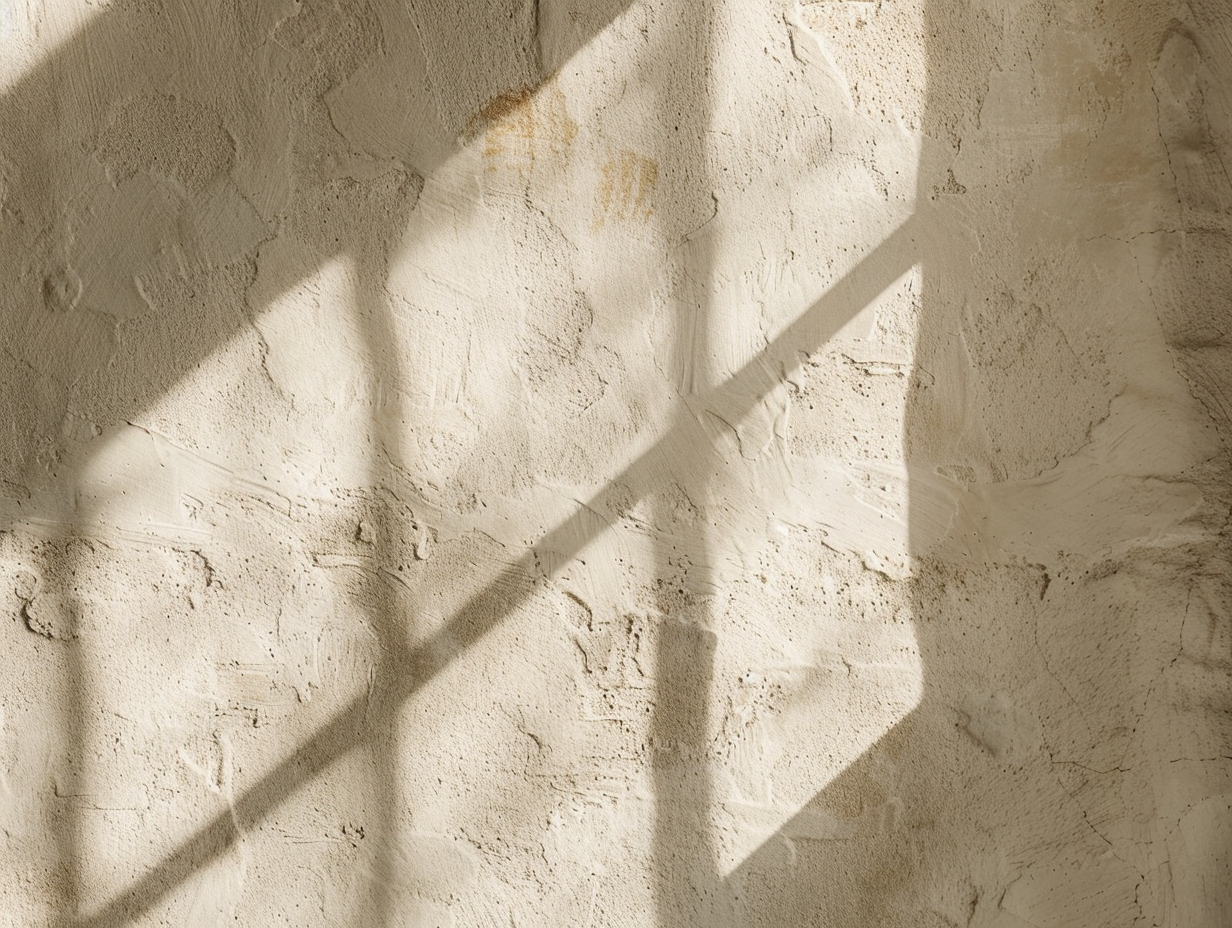
Lime paint is the lightest member of the lime family. Slaked lime, water, and pigment, brushed on thin enough that the substrate’s tone reads through the first coat and only resolves under the second or third. Each layer is mineral, not a film. The wall does not look painted. It looks washed, the way a piece of limestone looks when sun has moved across it for an afternoon.
The trade calls this kind of finish a mineral wash because the binder is not a polymer or an acrylic. The binder is calcium hydroxide that slowly reverts to calcium carbonate by pulling carbon dioxide out of the room. That carbonation is the cure. It is also what makes lime paint UV-stable in a way that almost no acrylic paint can match: the pigment is locked inside a stone matrix, not suspended in a plastic film that yellows.
What lime paint is not is the section the rest of this article exists to clear up.
Lime paint versus limewash versus milk paint versus lime-look acrylic
Specifiers conflate these four. They are not interchangeable.
Lime paint is slaked lime, pigment, and water in a thicker, more controllable suspension than limewash. Two to three brushed coats. Cloudy translucent depth at the finished wall. Interior or exterior. Breathable. UV-stable. The finish a designer usually means when they say “lime paint” out loud in an interior context.
Limewash is the same chemistry at a thinner ratio. More water, less body. Traditionally used on exterior masonry and historic interiors. Reads more washy, less covering, with heavier mottling and a more weathered look. Closer to a stain than a paint. Excellent on raw brick, lime render, and stone. Less suited to a finished interior wall where the designer wants control over coverage.
Milk paint is casein (a milk protein) bound with lime and pigment. The lime is present but as a co-binder, not the primary one. Milk paint is matte, antique-feeling, and beautiful on wood and furniture. It does not behave the same way on plaster walls and it does not carry the same UV or breathability profile.
Lime-look acrylic paint is the category that has flooded the residential market in the last several years. It is acrylic paint formulated with matting agents and a slightly cloudy pigment dispersion to mimic the look of a lime finish under a phone camera. It is a film on a wall. It is not breathable. It does not carbonate. It does not age into the substrate. It is paint dressed up as plaster. The finish lasts as long as any flat acrylic and looks like itself within a year under raking light.
The difference matters because three of the four are mineral and one is a coating. A specifier who writes “lime paint” without naming the chemistry can receive any of the four from a contractor working off the language alone.
A coastal Carolina farmhouse: the application anchor
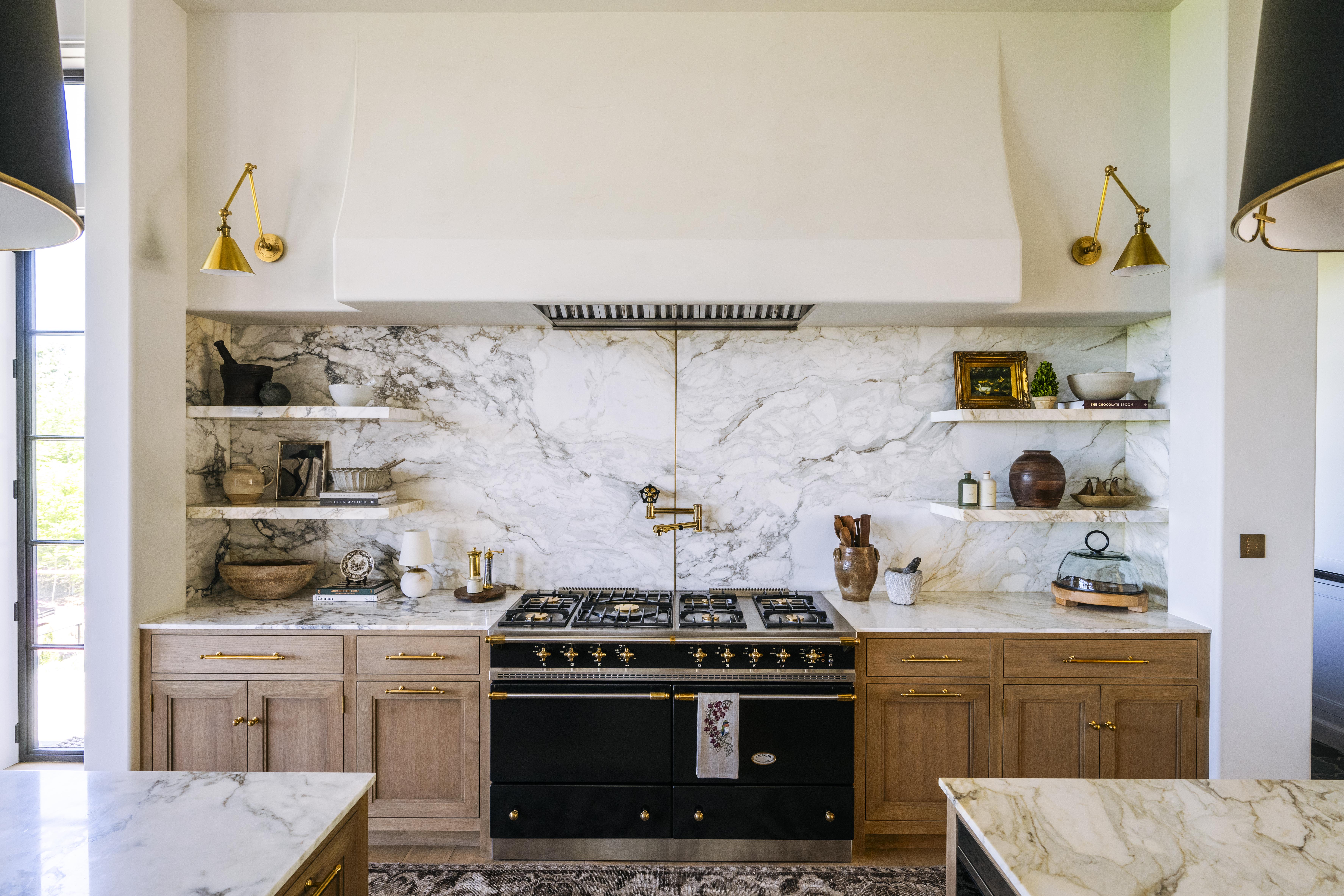
A modern farmhouse on the coastal Carolina plain, [[CONFIRM region/town]], specified lime paint across the main living spaces. The brief asked for walls that would hold the morning light off the marsh without going flat by afternoon, and that would not need repainting on the homeowner’s timetable. The architect of record is [[CONFIRM]]. The interior designer is [[CONFIRM]]. Year completed is [[CONFIRM]].
The walls were prepared as a porous mineral substrate, not as primed drywall. Lime paint behaves on porous surfaces the way watercolor behaves on cold-press paper: the substrate participates in the finish. A sealed primer or a vinyl-matte basecoat will reject the lime and force a film-like coating that defeats the point. On this commission the studio carried a lime-compatible mineral primer over the prepared drywall to give the lime a substrate it could bond into. On a true lime plaster or limestone wall, no primer is needed.
Two coats were brushed wet, with a four to six hour window between them to allow the first coat to set without fully carbonating. A third coat went on selectively where the design called for more depth in the cloud. Brushwork moved in long, intentional strokes rather than crosshatched coverage, because the brush mark is part of what makes the finished wall read as cloudy rather than as patchy. The wall finished matte at every distance and gained depth as it cured over the following weeks.
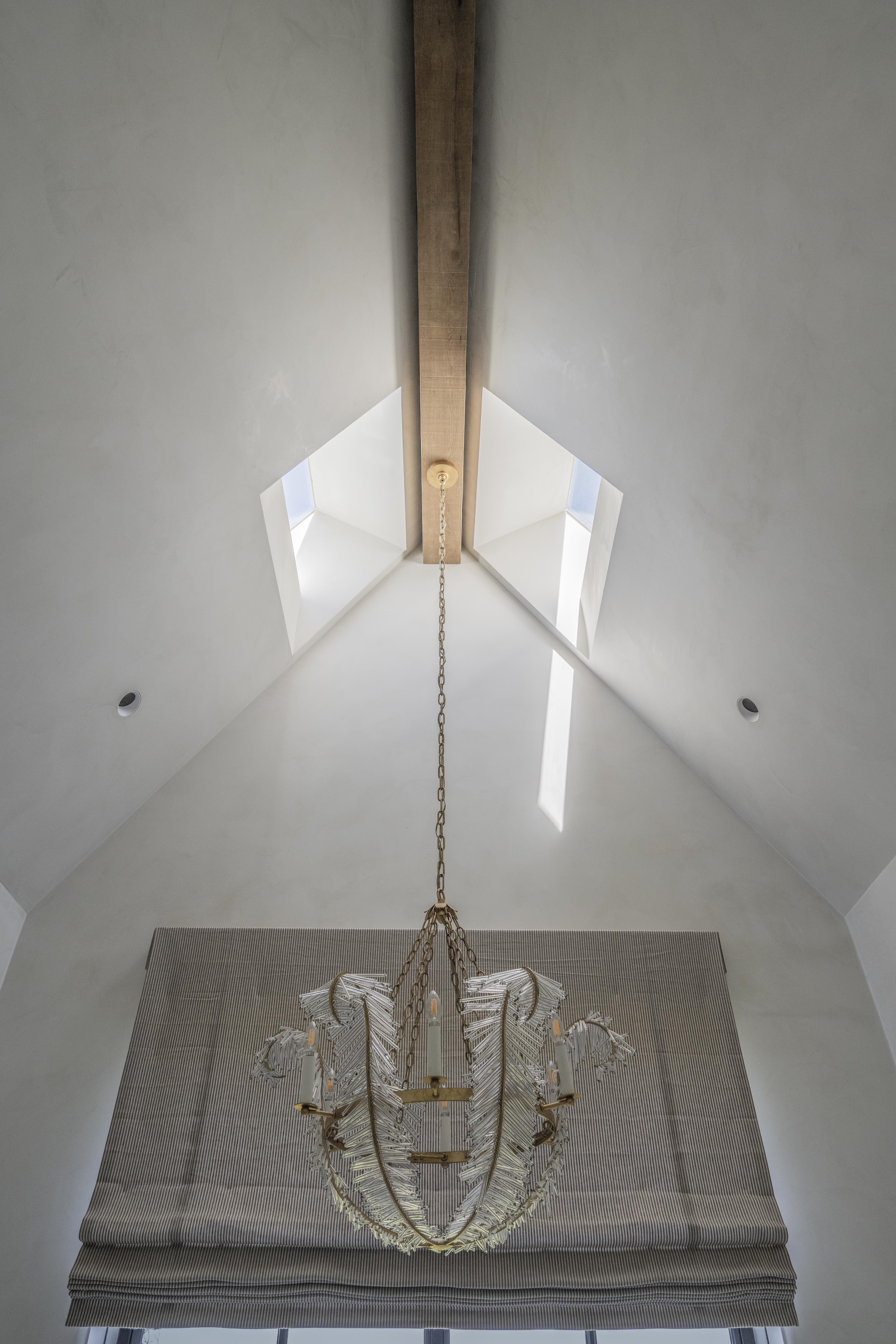
Light on the finished walls behaves differently than on paint. In the morning, the wash reads soft and luminous. In the afternoon, with raking sun across the surface, the brushed layers show as gentle translucent variation. The wall is alive to the room’s light because the pigment is inside a mineral, not floating on a film.
Material and method
Composition is slaked lime, mineral pigment, and water. Slaked lime is calcium hydroxide produced by adding water to quicklime under controlled conditions. The studio’s lime is aged in a pit until the particles round out and the suspension stays open in the brush. Pigments are mineral oxides chosen for UV stability and lime compatibility. Synthetic organic pigments are excluded because lime’s high pH will not hold them.
Coat sequence is typically two to three brushed coats. The first coat carries the substrate’s tone through and sets the depth floor. The second resolves the color into its intended value. The third, when used, builds cloud depth in the areas the design treats as primary. Each coat goes on thin. A thick coat is a mistake that reads as a streaky film and cannot be hidden under the next coat.
Substrate prep is the part that determines whether the finish behaves. The substrate must be porous and absorbent: raw lime plaster, mineral primer over prepared drywall, raw masonry, lime render. Glossy paint, vinyl matte, and sealed surfaces must be stripped or primed with a mineral primer formulated for lime compatibility. The sample board is approved against the actual prepared substrate in the actual room, not against a separate panel, because the substrate’s color and absorbency feed forward into the finish.
Curing is a multi-week process. The walls are dry to the touch in hours but continue to harden through carbonation over four to six weeks. The full UV and durability profile arrives at the end of that window. Visiting the room at one week and at six weeks shows two different walls.
Where it works, where it does not
Lime paint works on porous mineral substrates in interior and exterior applications. It works on a coastal Carolina farmhouse, a Central Florida cottage, a western North Carolina mountain house, and a Coastal SC porch ceiling. It works on raw lime plaster, mineral primers, raw masonry, and historic substrates. The breathability is genuine, which makes it appropriate for old buildings that need to move moisture rather than trap it behind a vapor-tight film.
Lime paint does not work over fresh latex or vinyl-matte coatings without proper prep, will not perform inside a bathroom that sees standing water on the wall, and is not the right call for a mudroom that takes a beating from boots and dogs. It is a mineral wash, not a scrubbable enamel. Where a wall needs frequent washing, specify a different finish.
A note for coastal projects specifically: salt air does not damage lime paint and in many cases helps it carbonate. The studio’s experience along the Carolina and Florida coasts is that lime finishes hold up to humidity and salt exposure better than acrylic films, which often blister and peel within a season near the water.
Cost reality
Lime paint sits between premium paint and full plaster on the cost ladder. Material is more expensive per gallon than acrylic, because the pigments are mineral and the lime is aged. Labor is the larger variable: a real lime paint installation involves substrate prep, mineral primer if needed, careful sample-board work, and brushed application by a hand that knows how to read the cloud as it develops. Variance is driven by substrate condition, coat count, the depth of the cloud the design wants, and whether the studio is also responsible for the underlying plaster. Compared against the life of a wall, lime paint is the cheaper specification: it does not need to be repainted on a five-year cycle, and the cloud deepens with age rather than dulling.
Specifying it
What an architect writes into a drawing for this finish: “Hand-brushed lime paint, two to three coats, slaked lime and mineral pigment, low-specular matte. Substrate to be approved as porous and lime-compatible. Mineral primer where required. Sample board signed off on prepared substrate in [room name] before full application. Brushwork to remain visible as cloudy translucent depth, not crosshatched to even coverage.”
Spell out that the finish must be lime paint, not lime-look acrylic. The two words make the entire difference.
Closing
Lime paint is the finish to specify when a room needs a wall that breathes, ages well, and stays alive to its own light. Start with a conversation: /contact.