
EIFS is a multi-layer synthetic envelope built from rigid insulation, a mesh-reinforced base coat, and an acrylic finish coat. Specify it when the project needs continuous thermal performance and the envelope is the architecture. Not a substitute for lime stucco on a historical or vapor-open wall.
The finish in plain language
EIFS stands for Exterior Insulation and Finish System. It is not a single material. It is an assembly. Rigid insulation board, typically expanded polystyrene (EPS), is mechanically and adhesively attached to a prepared substrate. A polymer-modified base coat is applied over the insulation and embedded with an alkali-resistant glass-fiber mesh. A synthetic finish coat, usually acrylic-based and pigmented through, goes on top in a controlled texture.
It is not lime stucco. Lime stucco is a vapor-open mineral wall built from sand, lime, and water, troweled in three coats over lath or a masonry substrate, and cured by carbonation. EIFS is a closed-cell insulated assembly with a synthetic skin. Both can be made to read as a stucco wall from the curb. They do entirely different things inside the wall. Specifying one when the project needs the other is how envelopes fail.
The version of EIFS that should be specified today is a drainage-plane (sometimes called water-managed) system, conforming to ASTM E2568 [[CONFIRM applicable revision]]. Older barrier EIFS, common in the 1980s and into the 1990s, had no drainage path behind the insulation. That is the version that earned EIFS its bad reputation, and that version should not be specified on new work.
The coastal Carolina envelope
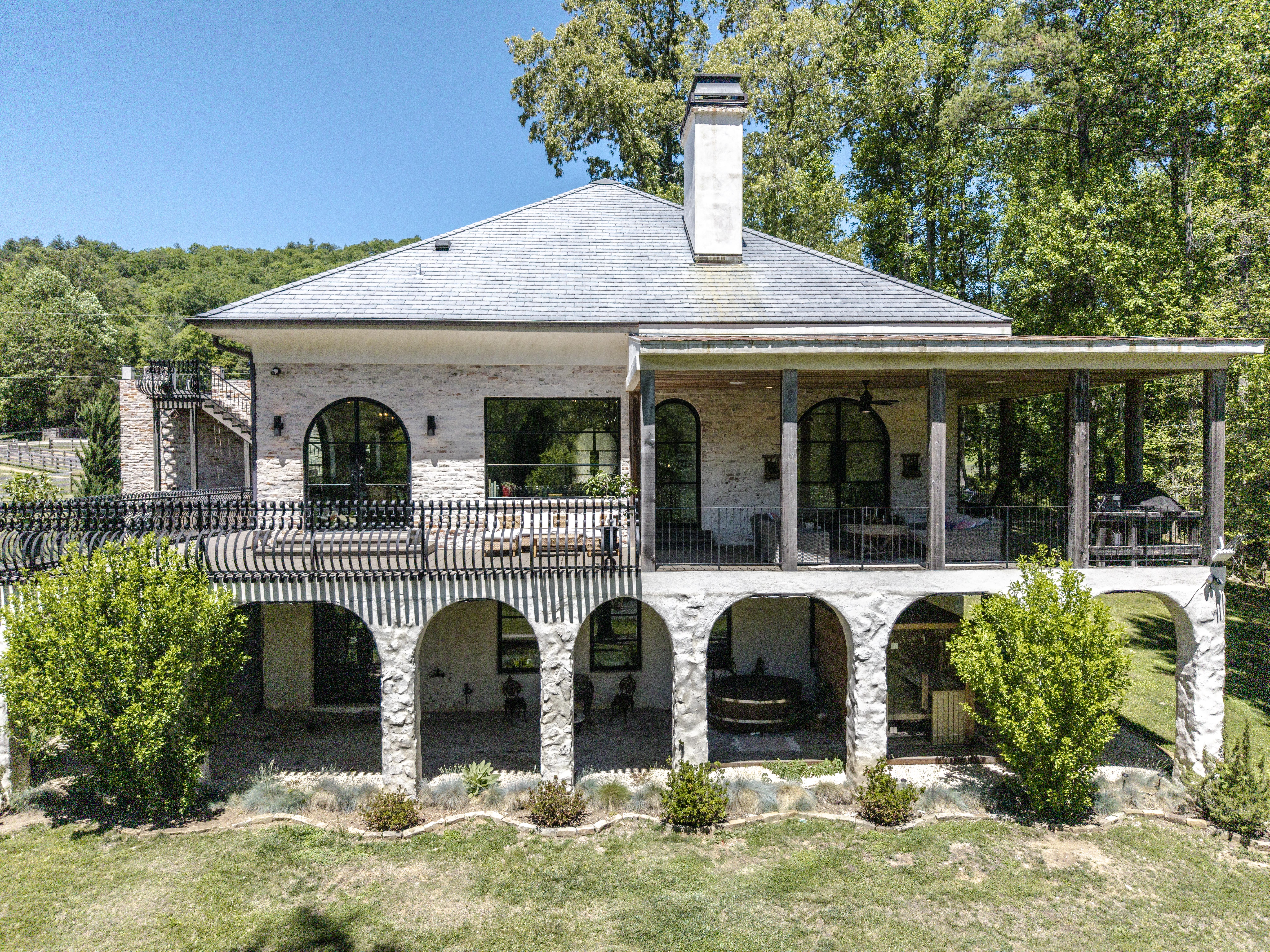
The project anchor here is a hospitality building on a coastal Carolina site, [[CONFIRM city / county]], scoped for a continuous-insulation envelope with a stucco-read exterior. Hurricane wind pressures, salt air, and a humid summer load drove the spec toward a drainage-plane EIFS rather than a hardcoat stucco over CMU. The architect of record is [[CONFIRM]]. The general contractor is [[CONFIRM]]. The envelope area is [[CONFIRM square footage]].
The brief was straightforward: continuous insulation across the field to meet the energy code without thermal bridging at every stud and slab edge, a wall that could shed wind-driven rain at the joints between the field and openings, and a finish texture that read as troweled mineral plaster at three meters. EIFS, correctly specified, hits all three. The studio’s role on a build of this kind is the assembly itself: insulation attachment, drainage-plane integration at the substrate, mesh embedment discipline at the base coat, and finish-coat application across the field.
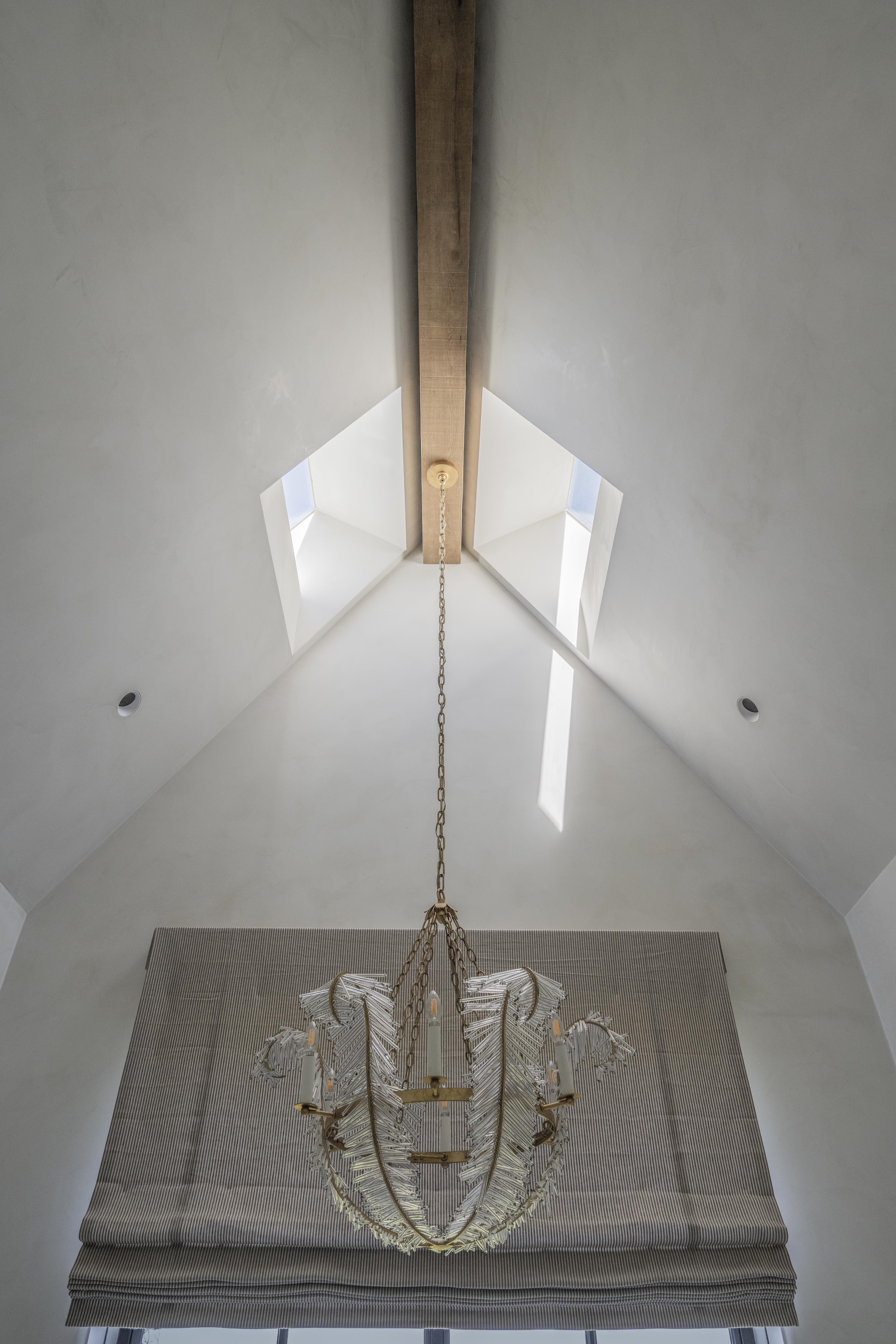
Photography on the project documents the envelope in its first finished season, [[CONFIRM year]], by Danny Gale. The frames show what the system looks like once the textured finish coat is curing in the coastal light: the field at distance, the corner returns, the head and sill flashings where the drainage plane meets the openings. Detail frames show the back-wrap of mesh at the openings and the termination at the building base. This is what a correctly installed envelope looks like before it gets covered by furniture, signage, or a planted bed at the foundation.
Material and method
The substrate on this commission is exterior sheathing over wood-frame walls. Before any insulation is set, a fluid-applied or sheet-applied water-resistive barrier (WRB) goes onto the sheathing. That WRB is the drainage plane. Everything above it has to drain to it, and the WRB itself has to drain to flashings that exit the wall. This is the single most important detail in the entire assembly and the most common point of failure in earlier-generation EIFS installations. If the drainage plane is not continuous, the system does not perform.
Rigid EPS insulation is then set against the WRB. Thickness on this envelope is [[CONFIRM, typically 1.5 to 4 inches]] depending on the energy modeling. Insulation is back-wrapped at every termination, opening, and penetration so the edge of the foam is never exposed at a joint. Mechanical fastening, where required by wind load, is set with washers rated for the system. Boards are staggered and rasped flush; raster lines or hollows telegraph through the finish, so this pass is slow on purpose.
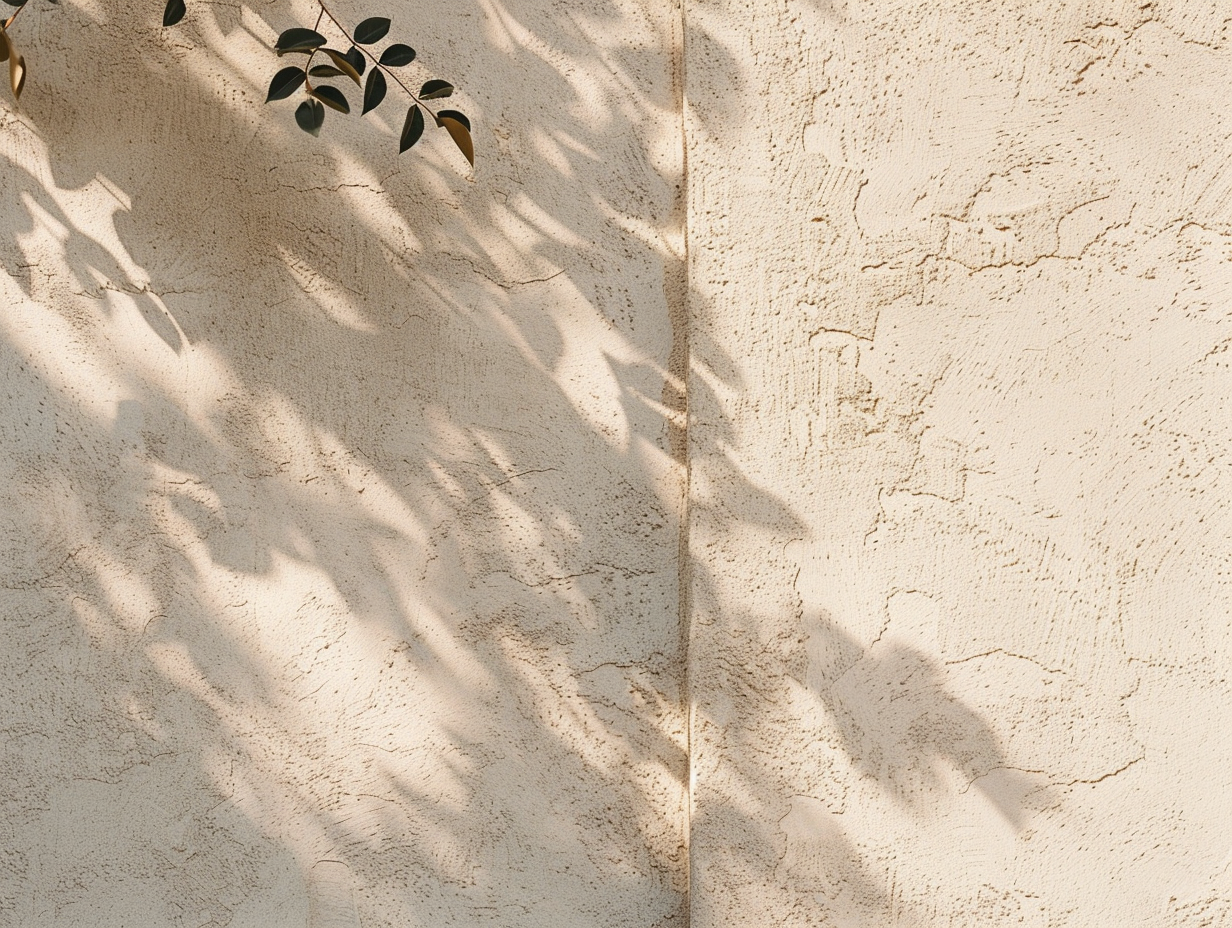
The base coat is a polymer-modified portland or fully synthetic mix, troweled onto the insulation at a controlled thickness. While it is still wet, an alkali-resistant fiberglass mesh is embedded into it, fully encapsulated, with overlaps at every seam. At opening corners, a diagonal piece of mesh goes in first as crack control. A second base coat pass covers the mesh fully so no weave reads through the finish. ASTM E2568, ASTM C1397, and ICC-ES evaluation reports govern the materials and the assembly. The finish coat is acrylic-based, pigmented through, and floated to the specified texture: fine sand, swirl, or hand-troweled. Pigment is integral, so a scratch does not flash a different color underneath.
Drying and curing windows are not optional. Base coat needs to cure before the finish coat goes on. Finish coat needs a dry weather window for application and the first hours after. On coastal work, that often means scheduling around afternoon storm cycles rather than calendar dates.
EIFS or lime stucco: where each is the right specification
This is the section that decides whether the project gets built right.
Lime stucco is the right specification when the wall needs to breathe. Historical masonry, brick, stone, older CMU without continuous insulation, and any wall where moisture has to be able to move in both directions through the assembly. Lime stucco is a vapor-open mineral system that lets a wall dry to either side, which is why historical buildings survived for centuries with it and why retrofitting them with a vapor-closed coating is how preservation projects fail. If the project is an Asheville restoration, a coastal Carolina historic district building, or any wall on traditional masonry, the answer is lime stucco. The studio’s Custom Stucco piece walks through the lime case in detail.
EIFS is the right specification when the envelope is the architecture and the energy code is driving continuous insulation. New commercial, hospitality, multi-family, and some upper-end residential builds where the wall assembly is engineered from the inside out for thermal performance. EIFS gives the project a continuous insulation layer with no thermal bridge at studs or slab edges, a controlled drainage plane, and a finished exterior in one integrated assembly. Hardcoat three-coat stucco can be specified over CMU for similar visual results, but it does not give you the insulation value, and adding insulation to that wall is a separate, thicker, more expensive exercise.
The honest framing for a specifier: do not pick the system on a curb-appeal basis. The two can be made to look similar at three meters. They do not perform similarly inside the wall. Picking lime stucco for thermal performance is the wrong move. Picking EIFS on a historical masonry restoration is the wrong move. The studio will tell a client which way to go before the first sample board, because once the spec is signed the wall has to be the right wall.
Where EIFS earned its bad name
The failures that gave EIFS a bad reputation in the 1990s and early 2000s were almost entirely failures of barrier-system installations on residential framing. No drainage plane behind the foam. No back-wrap at openings. No kick-out flashings at roof-to-wall intersections. Sealant joints relied on for the only line of defense, and sealant always eventually fails. Water got in, the framing rotted, the system got blamed.
The honest reading is that the assembly that failed was a different assembly than the drainage-plane systems specified today. Current code in most jurisdictions requires water-managed EIFS conforming to ASTM E2568 and an evaluation report from ICC-ES. Properly specified, properly detailed at flashings and terminations, properly installed by a crew that knows the assembly, EIFS performs. The industry’s recovery on this is real and well documented, and the studio will not specify, or install, a barrier system in 2026.
Cost reality
EIFS does not price like a coat of paint, and it does not price like a hardcoat stucco. The unit cost lands between the two on most envelope work, but the comparison is not unit cost. It is total wall-system cost: insulation value, framing depth, sheathing, WRB, finish, and the labor to integrate them. EIFS bundles several of those into one assembly. Hardcoat stucco bundles fewer, and you add continuous insulation separately or accept thermal bridging.
Variance on the EIFS pricing comes from a short list: insulation thickness driven by energy modeling, mesh weight (standard, intermediate, high-impact), finish texture (a hand-troweled finish is a slower pass than a sprayed sand), and the perimeter-to-field ratio (a building with many openings has more back-wrap and corner mesh than a flat warehouse wall). Coastal work also carries a wind-load assembly premium for fastener spacing and corner reinforcement.
Over the life of the wall, EIFS holds its energy performance as long as the drainage plane stays intact. The finish coat will eventually want recoating in the way any acrylic exterior wants recoating, on a cycle measured in decades rather than years. The continuous insulation value does not degrade.
Specifying it
A clean EIFS spec names seven things: the system manufacturer and current ICC-ES evaluation report number, conformance to ASTM E2568 (drainage-plane EIFS) and applicable referenced standards, the water-resistive barrier and drainage detail at the substrate, insulation type and thickness per energy modeling, base coat and mesh schedule including high-impact mesh at grade and traffic zones, finish coat type and texture with sample-board sign-off under exterior light, and the flashing schedule at every opening, penetration, parapet, and termination.
The studio runs sample boards for the finish coat on site, mounted on the building under the exposure the building will actually live in. Coastal light reads pigment differently than studio light. Sample-board approval is the gate that protects the project from a finish that looked correct on a swatch and wrong on the field.
EIFS, correctly specified and installed, is a quiet system. It does its work inside the wall and reads as a clean troweled exterior from the curb. It is not the right answer for a historical restoration. It is the right answer for a new envelope engineered to perform. Plaster by Orciani has been working in exterior plaster systems since 1981, second-generation, out of Asheville with a second base in Central Florida. Start with a conversation. Contact the studio.