
Custom stucco is a pigmented lime-sand mix troweled onto a prepared masonry substrate. Specify it when you want a breathable, mineral exterior that ages with the building rather than peeling off it. The finish is integral, not painted. Color is in the mix. Texture is in the hand.
The finish in plain language
A real custom stucco is three things at once. It is a binder (lime, sometimes with a small portion of natural cement), an aggregate (graded silica sand, occasionally a fine marble or limestone fines), and a pigment (mineral oxides, integrated through the wet mix). Troweled onto block, brick, or stone in two or three coats. Cured slow. Left to do what lime has done on buildings for two thousand years.
The confusion in the market is that “stucco” has become a category word. A builder can say “stucco exterior” and mean a hand-applied lime mix, a Portland-cement scratch-and-brown topped with a tinted finish coat, or a foam-board EIFS assembly with a thin synthetic skin. Three different walls. Three different lifespans. Three different relationships to water. The article you are reading distinguishes them so the line item on your drawing means what you think it means.
The project anchor
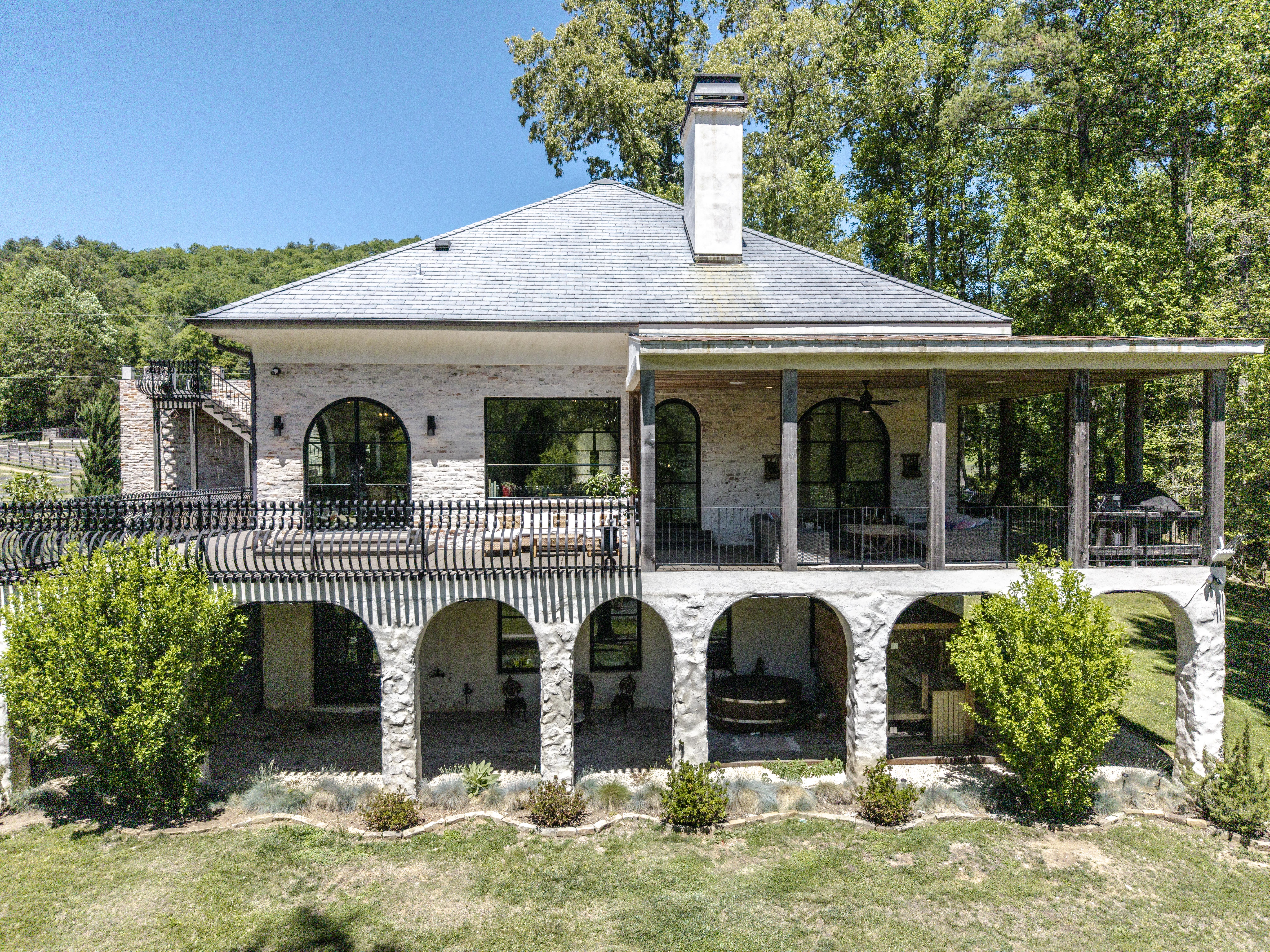
A hypothetical commission on the [[CONFIRM region: Central Florida / coastal South Carolina / coastal Georgia]] coast. A residence sited within [[CONFIRM distance]] of the water, masonry block construction, [[CONFIRM square footage]] of exterior wall. The architect, [[architect]], specified a pigmented lime stucco on the body of the house with a smoother sanded finish on the entry elevation and a coarser troweled body on the side and rear elevations.
The reason for the spec, in the architect’s own brief: the building had to look like it belonged on that coast in [[CONFIRM year]] and in [[CONFIRM year + 50]]. The exterior could not be a coating that would chalk, blister, or need a repaint cycle every seven years. It had to be the wall.
PBO carried the work in coordination with the masonry sub. The block went up clean and square, scratch coat keyed into the substrate, body coat floated to plane, and the pigmented finish coat troweled in panels matched to the architect’s sample boards. Two crews on the wall at a time, wet-on-wet across panel boundaries, with control joints designed into the drawing rather than added after.
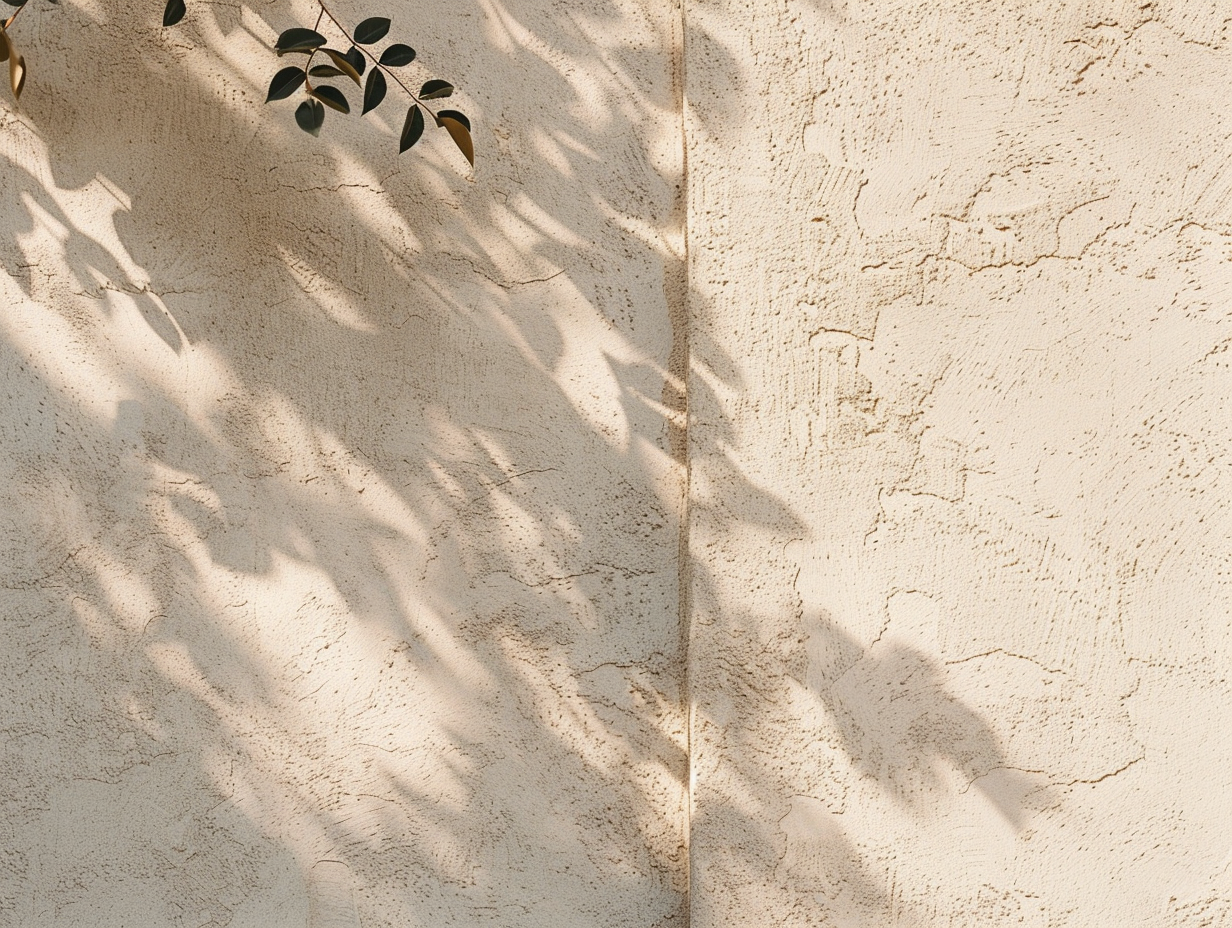
The frames document the same wall under three light conditions: morning, mid-afternoon, and a low west sun. The same finish reads three different colors. That is lime doing what lime does. A flat coating cannot reproduce it.
Material and method
The mix on a custom lime stucco is specified by ratio. A working body coat on this kind of exterior runs roughly 1 part aged lime putty to 2.5 to 3 parts graded sand, by volume, with a small addition of natural hydraulic lime (NHL 3.5 is typical for a southern coastal climate) for cure speed and early strength. Sand grading matters. A well-graded sand from coarse to fine packs without voids and trowels without tearing. A single-grade sand, regardless of how clean, will read flat and crack in the dry.
Pigment goes in the mix, not on the wall. Mineral oxides (iron oxides for the warm range, ultramarines and cobalts for the cool range, manganese for the deep neutrals) are weighed as a percentage of binder, dispersed into the gauging water, and folded through. Integral pigmentation is the reason a chipped lime stucco still reads its color where the chip exposes the substrate edge. A surface stain, by contrast, is the depth of a coat of paint and reveals the body of the wall when it fails.
Coat sequence on a masonry substrate runs scratch, brown, finish. The scratch coat is keyed mechanically with a notched trowel and left to set. The brown coat brings the wall to plane and is floated, not troweled smooth, so the finish coat has something to bond to. The finish coat is where the texture decision lives. A swirl trowel, a wood float, a sand finish off a sponge float, a smooth steel trowel, a coarse dash thrown from a hopper. Each is a different wall under the same mix.
Drying and curing are not the same thing on a lime stucco. Drying is the loss of mix water in the first 24 to 72 hours. Curing is the slow reaction of lime with atmospheric carbon dioxide that hardens the wall over months and years. In a humid coastal climate the cure is favored. In direct south Florida sun, the wall has to be misted on a schedule for the first three to seven days so the surface does not flash-dry and powder. Crew discipline at this stage is the difference between a stucco that hardens to stone and a stucco that dusts off a fingertip a year in.
Where it works, where it does not
Lime stucco works on masonry. Block, brick, stone, terracotta. Anything mineral that the lime can bond to and breathe with. It is correct for southern coastal climates precisely because it is vapor-open. Water that gets into a masonry wall (and on the southeastern coast, water always gets in) leaves through the wall surface rather than blistering a sealed coating off it. A lime-finished masonry wall handles its own moisture cycle.
Lime stucco is not the right answer on a wood-framed exterior over sheathing. The substrate moves with humidity. The wall assembly needs a drainage plane, a weather barrier, and a finish system designed to accommodate framing movement. That assembly is what synthetic stucco and EIFS were built for, and it is where they are correct. The line is not “real vs fake.” The line is substrate.
The honest comparison: a Portland-cement-only stucco is harder and stronger at 28 days, and dries faster on a job site, which is why it became the default in mid-twentieth-century residential. The trade-off is that it is also more brittle and less breathable, and on a masonry substrate it traps moisture rather than passing it. A lime or lime-cement custom stucco gives up some early strength to gain breathability, a slower more forgiving cure, and a surface that takes integral pigment without flashing. On the right wall, that is the trade you want.
Where custom stucco lives next to EIFS and synthetic systems
EIFS (Exterior Insulation and Finish Systems) is a foam-board insulation panel mechanically fastened or adhered to a sheathing substrate, base-coated with a fiberglass-mesh-reinforced cementitious skim, and finished with an acrylic or silicone-acrylic topcoat. It is a system, not a finish. Done well, on the right detailing, with a drainage plane behind it, it delivers a continuous insulation envelope at a price point a lime stucco cannot reach. PBO offers a synthetic finish line precisely because it is the correct answer on some walls.
What it is not is interchangeable with custom lime stucco. The two walls behave differently to water, to impact, to temperature movement, to time. Specifying “stucco exterior” on a drawing without naming which one is how a builder ends up delivering an acrylic-coat EIFS where the architect drew a lime wall, or vice versa. The remedy is in the spec sheet. Name the system. Name the binder. Name the substrate.
Cost reality
Custom lime stucco runs materially more than a Portland-cement stucco or an EIFS finish on a per-square-foot basis. The differential is driven by lime cost, sand grading, integral pigment, coat count, crew time, sample-board iteration, and the misting and protection schedule during cure. What it returns is a wall that holds its color, breathes its moisture, and does not enter a repaint cycle. Over the 30 to 50 year horizon a coastal residence is built for, the lime wall typically costs less per year of service than the painted alternative, and it looks like architecture rather than maintenance the entire time.
The variance inside the line item is mostly sample boards and texture decisions. A single body texture across the house costs less than three. A pigmented body with a separate accent pigment on a chimney or entry costs more than a single pour. A polished trowel finish costs more crew time than a sand-floated body. The architect and PBO walk the sample boards together before the wall is mixed at scale.
Specifying it
What goes on the drawing: custom lime stucco, pigmented integrally, three-coat application (scratch, brown, finish) over masonry substrate, finish texture per approved sample board, mix ratio per submittal, NHL content per coastal exposure schedule, sample sign-off required before production. Reference the sample board approval back to the Process on the studio’s homepage. Specify the misting and protection requirement for the cure window. Name the pigment system and the binder source so the wall in year ten is the wall on the drawing.
A line that names “stucco exterior” and leaves the system undefined is how the wrong wall gets built. A line that names the binder, the substrate, the coat sequence, and the texture is how the right one does.
Start with a conversation. Contact the studio.